

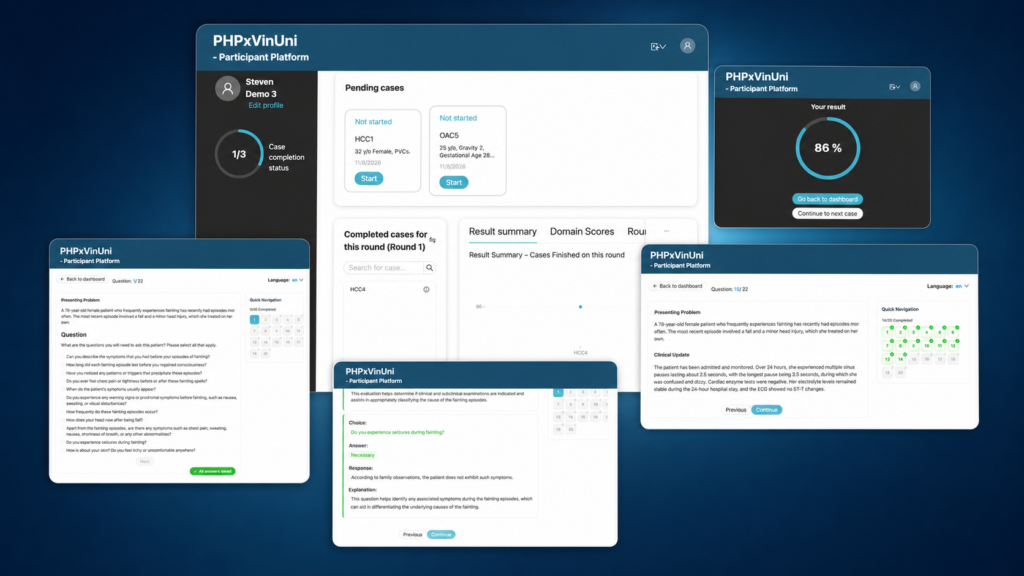
Measuring and improving clinical decisions
The EQIS Platform is a scientifically validated method for measuring and improving clinical decisions. Designed for low- and middle-income countries, EQIS uses realistic patient scenarios, evidence-based feedback, and repeated learning rounds to measure how clinicians care for their patients and improve their practice.
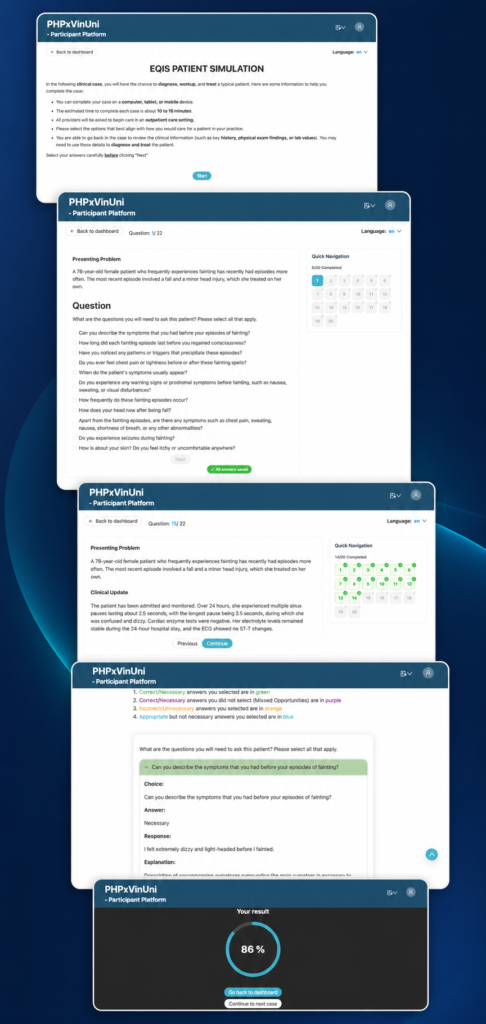
How EQIS works
EQIS is like a patient walking into a clinician's computer. The clinician gathers history and examination findings, orders tests, chooses a diagnosis and treatment, and plans follow-up. After every submitted question, EQIS compares the decision with evidence-based guidelines and provides private feedback during the case.
Realistic online cases
Each case mirrors a patient visit and takes participants about 20 minutes to complete on an internet-connected phone, tablet, or computer.
Evidence-based feedback
Clinicians receive feedback following each submitted question. A comprehensive summary at the end highlights strengths and opportunities for improvement.
Change over time
Clinicians complete six rounds of three cases over two years, allowing local leaders to track improvement and reduced variation across facilities and cohorts.
Six Domains of Clinical Care
What clinicians receive
- Practice with cases aligned with local clinical priorities and guidelines.
- Instant, private feedback on every decision and response, grounded in current guidelines.
- Evidence-based explanations and references.
- A learning environment focused on improvement.
- A clear view of individual progress across repeated learning rounds.
What health systems receive
- Anonymous, aggregate analytics that identify shared strengths and gaps in care.
- De-identified individual, facility, and cohort trends across repeated rounds.
- Evidence to focus collaborative learning and quality improvement work.
- A pathway to clinical education operated and financed by the country partner.
- Data that can support continuing education, licensing, relicensing, and health-system planning.
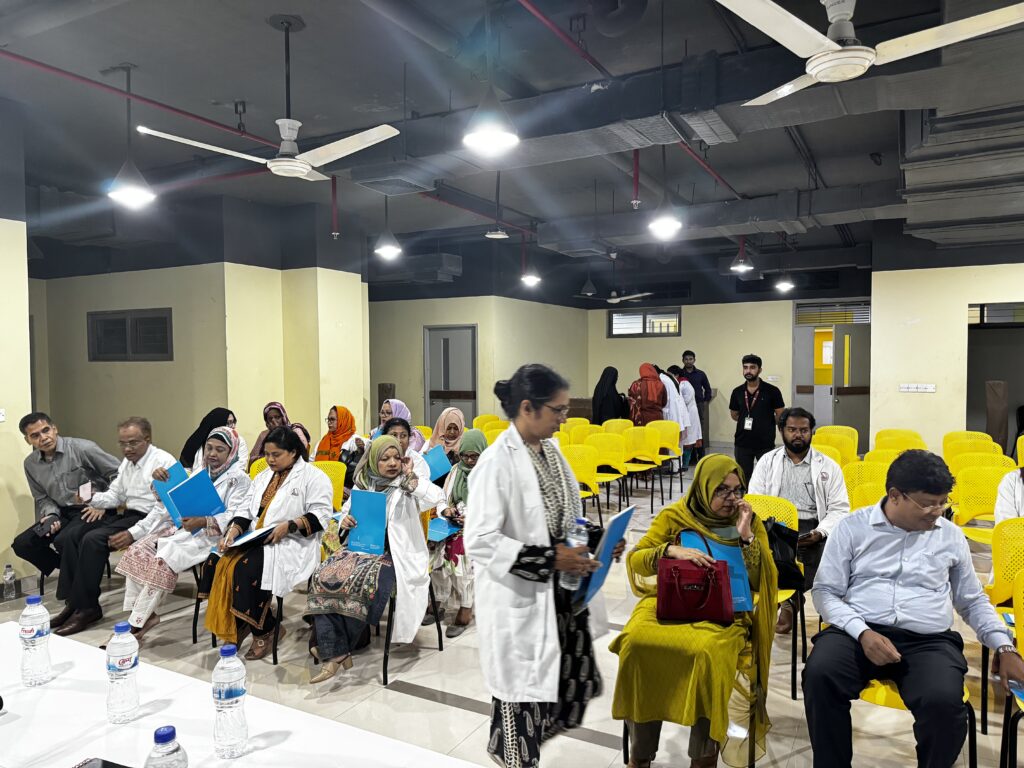
Built for local context
Built for local context
AI-assisted tools prepare early drafts and translations. Doctors who practice in-country revise every EQIS case through multiple review rounds using evidence-based guidelines and resources available at participating sites. Clinicians receive physician-approved content written by doctors who are practicing in the same hospitals that they are.